Categories
History and culture

Games of chance that disappeared over time

Throughout history, many games of chance were once popular but have gradually faded into obscurity. Some disappeared due to social changes, others because of evolving tastes, and many were simply replaced by new forms of entertainment.

Exploring these games also helps us understand how leisure has evolved over the centuries.
Hazard: a precursor to modern games

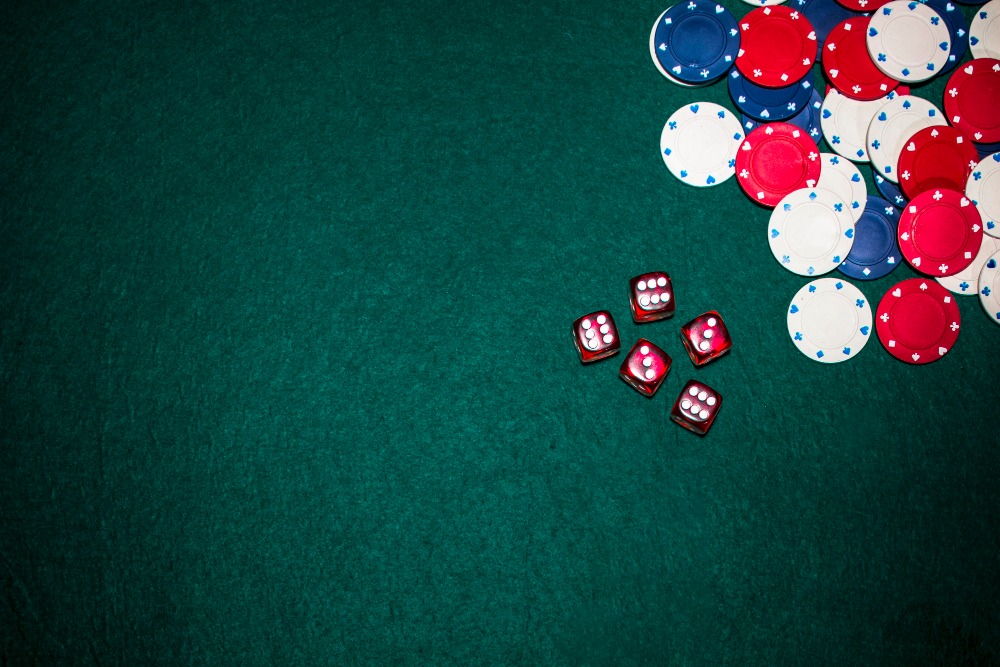
One of the oldest and now largely forgotten games is hazard, which was popular in Europe during the 17th and 18th centuries.

It was a dice game with complex rules that varied depending on the region. Over time, its popularity declined, giving way to more accessible and simplified games.

A clear example of how games evolve toward easier formats.

Faro: from popularity to decline

Faro was one of the most popular card games in Europe and America during the 18th and 19th centuries.

It was fast-paced and widely played in gambling houses. However, it gradually disappeared due to:

  • The emergence of new games
  • Trust issues in some settings
  • Regulatory changes

Today, it remains mostly a historical reference.

Early mechanical machines

Before modern slot machines, there were early mechanical devices with simpler systems.

These machines:

  • Had basic mechanics
  • Offered symbolic rewards
  • Operated without digital systems

With technological progress, they became obsolete and eventually disappeared.

Local dice games

In many regions, there were local dice games that never spread beyond their communities.

These games were often:

  • Passed down orally
  • Lacking standardized rules
  • Closely tied to local traditions

Over time, they were replaced by more universal and regulated games.

Games tied to specific contexts

Some games were closely linked to particular settings such as fairs, festivals, or social gatherings.

As these contexts changed or disappeared, so did the games associated with them.

In many cases, games depend on the social environment in which they are played.

Why do games disappear?

The disappearance of these games can be explained by several factors:

  • Changes in leisure habits
  • Technological evolution
  • New, more appealing alternatives
  • Regulation and control
  • Lack of adaptation to new generations

Rather than vanishing completely, they simply lose relevance over time.

Constant evolution

The world of gaming is not static. Some games disappear while others evolve or emerge.

What we consider normal today was once new, and what seems modern now will continue to evolve in the future.

The value of forgotten games

Although many of these games have disappeared, they remain part of the history of entertainment.

Understanding them helps us better appreciate how gaming has adapted to each era, always shaped by society and its changes.

Categories
History and culture

Timeline of gambling in Spain: from traditional games of chance to regulated entertainment

Gambling has been part of Spain’s history for centuries.

This timeline highlights the key moments that have shaped the development of gambling in Spain up to the present day.

Antiquity and the middle ages: the first games of chance

Dice were already used in Roman Hispania, where soldiers and citizens played various games based on chance. During the Middle Ages, card games became increasingly popular, although they were periodically banned by authorities.

Gambling was part of social life, even if it was not always well regarded.

16th–18th centuries: regulation and control

Over time, the Crown began regulating certain activities linked to games of chance. In 1763, the Spanish National Lottery was established — one of the most important milestones in the country’s gambling history.

The lottery was not only a form of entertainment but also a source of state funding.

19th century: the birth of casinos

During the 19th century, the first casinos emerged as social spaces connected to cultural and recreational circles. They were not exactly like modern casinos, but rather social clubs combining gatherings, events, and gaming activities.

Gambling was becoming institutionalized in certain environments.

1922–1977: prohibition

In 1922, many forms of gambling were officially banned in Spain. For decades, gambling remained restricted or illegal, except for certain activities such as the National Lottery and football pools.

This period marked a significant turning point.

1977: legalization of modern gambling

A key milestone came in 1977, when gambling was officially legalized in Spain.

From that moment:

  • Modern casinos were regulated
  • Bingo halls were introduced
  • Gaming machines were developed

This marked the beginning of the regulated land-based gambling sector as we know it today.

1980s–1990s: expansion of gaming machines

Type B gaming machines (slot machines) became popular in hospitality venues and casinos. The sector experienced significant growth and consolidated its role as a regulated economic activity.

Spain’s Autonomous Communities assumed regulatory powers in gambling matters, establishing their own specific rules.

2011: regulation of online gambling

With the approval of Law 13/2011 on Gambling Regulation, Spain established a legal framework for online gambling at the national level.

This law formalized the coexistence of land-based and online gambling under regulatory oversight.

2010s–present: focus on responsible gambling and control

In the last decade, the sector has strengthened its commitment to:

  • Mandatory access controls
  • Self-exclusion registers
  • Technological verification systems
  • Responsible gambling initiatives

The goal is to provide a safe, transparent, and supervised adult leisure environment.

The present: regulated entertainment and technology

Today, casinos in Spain operate under strict regional regulations, with approved systems, periodic inspections, and digital control measures.

The evolution is clear: from informal gambling practices to a regulated, technological, and supervised model.

A history that mirrors society

The evolution of gambling in Spain reflects broader social, economic, and legislative changes. Each stage represents a different perspective on leisure, regulation, and responsibility.

Gambling has moved from a popular pastime to a regulated activity within a solid legal framework.

And its history continues to unfold.

Categories
History and culture

Typical slot symbols: what they are and what they mean

What sets a slot machine apart from any other casino game are its symbols. They are not just decorative images: each icon has a reason for being, and over time, many have become iconic and instantly recognizable worldwide.

Here, we review the most typical slot symbols and the origin of each one.

Fruits: the eternal classic

Cherries, lemons, oranges, and watermelons are probably the most famous slot symbols. Their popularity began in the early 20th century, when some machines gave out chewing gum or candy instead of money. To make them easy to identify, these images were used on the reels.

That origin explains why fruit symbols became a classic. Today, more than a century later, they still appear in both traditional slot machines and modern online slots as a tribute to the past.

The BAR symbol: tradition with history

The BAR symbol has a very specific origin. It comes from the logo of the Bell-Fruit Gum Company, a chewing gum manufacturer that, like fruit symbols, was linked to slot machines that didn’t pay out cash.

Over time, that logo was simplified into the well-known rectangle with the word “BAR.” Today, it is one of the most recognizable icons in slot machines and appears in variations like single, double, or triple BARs, which usually indicate higher prizes.

The bell: a prize symbol since 1895

The bell is closely tied to the very beginning of classic slot machines. It appeared on the Liberty Bell, the machine created in 1895 by Charles Fey. When three bells aligned, the player won the highest prize.

This association with winning has remained intact over time, and although modern slots no longer ring real bells, the symbol still reminds us of where it all began.

Number 7: the ultimate lucky symbol

The number seven is considered a lucky icon in many cultures, and that reputation quickly carried over to slot machines. It became popular as the symbol of the highest prizes and soon became associated with jackpots.

This combination of superstition and tradition made it one of the most beloved slot symbols. Even in modern online slots, the number 7 maintains its status as a sign of good fortune.

Slot symbols are small visual stories that have stood the test of time. Every cherry, BAR, bell, and seven carries a piece of the game’s history. Today, in the digital era, they coexist with modern icons like wilds, scatter, and bonus symbols, proving that tradition and innovation can spin together on the same reels.

Categories
History and culture

Gambling in art and painting: from Caravaggio to contemporary art

Chance and risk have not only shaped the history of casinos but also that of painting and art. From the tense card games of Caravaggio to the bursts of color and symbolism in Dalí and Warhol, artists have captured the excitement, tension, and uncertainty of gambling.

This journey through centuries of artistic history reveals how gambling has served as a reflection of society, a mirror of human ambition, and an inexhaustible source of creativity.

The Baroque: Caravaggio and the theatricality of deception

One of the most famous examples is The Cardsharps (1594–95) by Caravaggio. In this work, the Italian painter depicts an unsuspecting young man playing cards while a cheat deceives him with the help of an accomplice. It is not just a portrait of gambling but an allegory of naivety and deceit. The psychological tension, dramatic lighting, and realism turn the scene into a moral mirror for the viewer.

The Cardsharps, painted by Caravaggio around 1594, is currently part of the Kimbell Art Museum collection (Fort Worth). You can view the image here

19th century: gambling, leisure, and modernity

With the arrival of modernity, gambling in art reflected social life and leisure spaces.

  • Paul Cézanne, with The Card Players (1890–92), shows peasants absorbed in their game, turning gambling into an intimate and ritual act.
  • Édouard Manet, in The Card Game, depicts card-playing scenes as part of the urban portrayal of bourgeois leisure and customs.

During this period, gambling was no longer just entertainment; it became a cultural and social symbol.

20th century and contemporary art: chance, repetition, and visual culture

During the 20th century, gambling took on a deeper symbolic value, exploring chance, repetition, and uncertainty:

  • In Surrealism, Salvador Dalí incorporated cards and games as symbols of fate and desire.
  • In Pop Art, Andy Warhol used casino and card iconography to critique consumerism and spectacle culture.
  • Contemporary artists like Damien Hirst and Yayoi Kusama engage with the logic of gambling through repetition, patterns, and probability, evoking the illusion of control and risk.

Conclusion

From the Baroque deceit of Caravaggio to the Pop aesthetic of Warhol, gambling in painting has been represented as morality, leisure, and cultural metaphor. Art reflects how we play and what gambling reveals about our relationship with chance, risk, and human obsessions.

Categories
History and culture

The psychology of color and sound in casinos

Casinos are not designed randomly. Every light, tone, and sound is carefully planned to create an environment that attracts, stimulates, and keeps players engaged. The psychology of color and sound thus becomes a key tool to extend the gaming experience and reinforce the feeling of entertainment.

In this article, we analyze how colors and sounds influence player behavior and why casinos use these sensory stimuli as part of their strategy.

The power of colors in casinos

Colors have a direct effect on human emotions. In casinos, specific color schemes are used to generate particular states of mind:

  • Red: associated with passion and excitement. It stimulates adrenaline and may lead to more active play.
  • Gold and yellow: convey wealth, luxury, and optimism. They are often found on slot machines and decorations that evoke prizes and jackpots.
  • Blue: brings calm and trust, though it is used moderately, since too much can be overly relaxing.
  • Green: linked to hope and luck. Commonly used on roulette layouts and card tables.
  • Flashing lights and contrasts: designed to capture attention toward the most profitable machines or special promotions.

In short, the combination of colors is no coincidence: it aims to keep players in a state of positive alertness, between excitement and comfort.

👉 To dive deeper into how the environment influences players, read our article What to expect in a casino: a beginner’s guide

The role of sound in the player experience

If there’s one thing all players associate with casinos, it’s their sounds. From the jingling of coins to the background music, each auditory stimulus serves a psychological function:

  • Reward sounds: when a machine pays out, it plays festive melodies or bright tones. This reinforces the feeling of success, even if the prize is small.
  • “Near miss” effect: some machines emit victory-like sounds even with minimal wins, creating the illusion of being “close to the jackpot.”
  • Background music: usually light, rhythmic, and continuous, avoiding silence. This maintains gameplay flow and reduces the perception of time.
  • Calibrated volume: the overall noise, though chaotic, is tuned to be stimulating rather than annoying, creating a “sound blanket” that envelops the player.

The combination of color and sound: a total stimulus

When bright lights combine with celebratory sounds, the psychological impact is even greater. Players don’t just see the reward — they hear it and feel it as part of the casino atmosphere. This generates immediate positive reinforcement, key to keeping them engaged.

Additionally, collective stimuli (flashing lights across multiple machines, jackpot celebration sounds) create the sense that “others are winning” and that luck is nearby, encouraging continued play.

Conclusion

The psychology of color and sound in casinos is not a minor detail, but a central part of the experience. Warm colors, intense lights, and carefully designed sounds immerse players in a vibrant, stimulating environment.

Understanding these techniques not only helps us appreciate the design behind casinos but also reflect on how they influence our emotions. And while they are part of the attraction, it is always important to remember the value of responsible gaming.

Categories
History and culture

The influence of casinos on pop culture

Physical casinos are not only part of traditional entertainment, they have also left a deep mark on popular culture. From Hollywood to music and video games, the world of gambling has served as the backdrop for some of cinema’s most memorable stories.

In this article, we explore how casinos have influenced pop culture through film, and why that fascination is still alive today in our own venues.

Why are casinos so attractive to cinema?

Casinos represent risk, luxury, and power. They are places where anything can happen: from a million-dollar win to a frantic escape. For screenwriters, they offer the perfect setting for plots of suspense, deceit, romance, or even comedy.

Visually, they bring elegance, light, and drama. Spinning roulette wheels, cards sliding across the table, and million-dollar bets are details that, on the big screen, instantly capture attention.

This cinematic setting has starred in many iconic movies. Here are some of the most representative:

🔹 Casino (1995) – Martin Scorsese

A masterpiece exploring the dark side of gambling in Las Vegas. Mafia, dirty money, and betrayal surround the story of a casino manager (Robert De Niro) and his fall from the top. A true classic.

🔹 Ocean’s Eleven (2001)

George Clooney, Brad Pitt, and a team of experts plan the perfect heist in three Las Vegas casinos. Style, strategy, and humor in a story that became a saga.

🔹 Casino Royale (2006)

James Bond faces an epic Texas Hold’em showdown. Glamour and tension in true 007 fashion.
🔗 Watch the official trailer on YouTube

🔹 21 Black Jack (2008)

Based on real events, it tells how a group of MIT students devised a system to count cards and beat casinos at their own game. Clever and addictive.

🔹 Rain Man (1988)

Dustin Hoffman and Tom Cruise give us an unforgettable blackjack scene. A nod to gambling in a film with a lot of heart.

Beyond cinema: gambling in pop culture

Casinos have also been referenced in:

  • Tv series such as Breaking Bad, The Sopranos, or The Simpsons.
  • Video games like Gta: San Andreas, Fallout: New Vegas, or Red Dead Redemption 2.
  • Songs like Viva Las Vegas by Elvis Presley, or The Gambler by Kenny Rogers.

In all these mediums, gambling represents a mix of risk, glamour, and adrenaline — elements that continue to fascinate audiences worldwide.

Categories
History and culture

Casinos in different cultures: traditions and taboos around the world

Casinos are present in many parts of the world as spaces for entertainment, but their social and legal acceptance varies greatly depending on the culture and the region. While in some countries gambling is part of everyday life, in others it is heavily restricted or even considered immoral. In this article, we analyze how different societies perceive casinos, what cultural taboos surround them, and the main legal restrictions that still exist.

Asia: between tradition and prohibition

China (except Macau)
In mainland China, gambling is banned, except in the special administrative region of Macau, home to one of the largest casino complexes in the world. While gambling is seen as a tradition tied to luck and numbers, the government maintains a very strict stance to prevent addiction and related crimes.

Read more about Macau, the asian gambling paradise.

Japan
Traditional casinos were banned for decades. Only recently has their construction been legalized under the “integrated resorts” model, which combines entertainment, hotels, and shopping areas. Even so, many Japanese still view gambling as socially questionable, except for the famous Pachinko, tolerated due to a legal loophole.

Middle east: gambling as a religious taboo

In many Muslim-majority countries, such as Saudi Arabia, Iran, or Pakistan, gambling is completely prohibited under Islamic law, which considers it “haram” (a sin). Opening casinos is not only illegal but also culturally rejected. Even online betting is penalized with fines or imprisonment.

In more moderate countries, such as Lebanon or Egypt, there are exceptions: in the Casino du Liban or in some Cairo hotels, gambling is allowed for foreign tourists, though still frowned upon by local society.

Europe: between strict regulation and cultural acceptance

Europe offers a more open but highly regulated approach:

  • Spain: casinos are regulated by autonomous communities, with restrictions on age, advertising, and proximity to sensitive areas. Some regions have tightened laws due to the rise of gambling among young people.
  • France, Germany, Italy: casinos are legalized but operate under strict state control. In many cases, citizens must pay an entry fee, which helps limit impulsive access.
  • Nordic countries: while gambling is legal, the focus is on responsible play. In Finland, for example, all profits from public slot machines go to social causes.

America: contrast between regulation and gambling paradises

United States
Laws vary by state. While in Nevada (Las Vegas) and New Jersey (Atlantic City) casinos are a consolidated and culturally accepted industry, in other states gambling is restricted or limited to Native American reservations. Some states prohibit casinos outside tribal territories.

Latin America
Countries like Argentina, Mexico, or Colombia have a wide offering of casinos, though the legal framework can be unstable or unclear. In some places, cultural perception is ambivalent: accepted as entertainment but with taboos around addiction, financial ruin, or ties to illegal activities.

Africa: religious and legal restrictions

In North African countries, gambling is generally banned, though there are tourist exceptions. In sub-Saharan Africa, casinos operate in countries like South Africa or Nigeria under government license, though they don’t always enjoy a positive social image.

Superstitions and taboos in casinos worldwide

Beyond legal restrictions, taboos and superstitions inside casinos are common everywhere:

  • Inappropriate clothing: in some Asian countries, wearing red in a casino can be seen as bad luck or even a challenge.
  • Forbidden numbers: in China, the number 4 is avoided. In the West, 13 is often considered unlucky, and many casinos remove that number from rooms or tables.
  • Superstitious behavior: entering through a specific door, avoiding touching certain chips, or spinning a chair three times are common rituals among regular players.

Conclusion

Casinos reflect not only a form of leisure but also the beliefs, values, and fears of each society. Understanding cultural restrictions and taboos is key not only to grasp how the industry operates globally but also to promote more conscious, respectful, and culturally adapted gambling practices.

Categories
History and culture

The origin of dice: a look at the history of one of the world’s oldest objects

Dice are much more than simple numbered cubes. Throughout history, they have accompanied humanity in games, rituals, and important decisions. From ancient Mesopotamia to the modern casinos of Las Vegas, their evolution reflects the role of chance and fortune in different cultures. In this article, we explore the fascinating historical journey of one of the world’s oldest objects.


The origin of dice: first examples in history

The earliest records of dice date back to around 3000 BC in ancient Mesopotamia. Archaeologists have discovered dice carved from bone and stone in excavations of civilizations such as the Sumerians and Babylonians. These early examples were not perfect: their irregular shapes reflected the craftsmanship of the time.

Dice were not only used for entertainment; they were also employed in religious rituals, divination ceremonies, and political decisions. Chance was seen as a way of communicating with the gods, seeking their guidance in moments of uncertainty.

🔎 Fun fact: the use of objects to cast lots and predict outcomes is documented even in shamanic practices and rituals of other ancient cultures.


Dice in ancient Egypt: a sacred element

In ancient Egypt, dice held a meaning that went beyond simple gaming. Some examples found in tombs date back more than 4,000 years. Made from noble materials such as ivory, wood, bone, and stone, they were used both for leisure and in religious practices.

For the Egyptians, rolling dice could be interpreted as an attempt to know the will of the gods, becoming a bridge between the human and the divine.


Dice games in ancient Rome

The Romans took dice gaming to a whole new level of popularity. Writers like Ovid mention dice in their works, pointing out their common use in taverns, gambling houses, and even imperial courts.

One of the most popular games was tali, which used elongated dice instead of cubes. Roman dice were made of bone, wood, and metals, and betting stakes could be so high that the State had to regulate the games on several occasions.

🎲 Famous quote: Alea iacta est (“The die is cast”) — Julius Caesar, upon crossing the Rubicon.


Dice and their evolution in the Middle Ages

During the Middle Ages, dice continued to be present, although their practice was often censured by the Catholic Church, which associated gambling with sin. Despite the prohibitions, both nobility and common people kept organizing games in castles, markets, and fairs.

At this time, more uniform and symmetrical dice began to be manufactured thanks to advances in carpentry and ivory work.

📜 Historical ban: the Fourth Council of the Lateran (1215) condemned gambling as an immoral practice.


The popularization of dice in the modern era

In the 18th and 19th centuries, with the emergence of the first modern casinos in Europe and later in America, dice became a key component of new gambling games.

The game of craps (hugely popular in Las Vegas) appeared during this period, based on older French and English games. Additionally, the rise of board games introduced dice as a central element in titles such as Monopoly, Parcheesi, or Risk.

The standardization of modern dice—with their six numbered faces and rounded edges—enabled their widespread use in both casinos and households.


Dice today: a universal symbol of chance and fortune

Today, dice remain a symbol of chance, fortune, and strategy. Despite the evolution of gaming, dice still hold their place in traditional casinos, family board games, and in film and literature. Their simplicity and ability to evoke the unpredictability of chance make them an iconic object in popular culture.

Moreover, dice continue to symbolize luck and risk. The dice pendants hanging from car mirrors in the United States, for example, are a cultural remnant of their association with fortune.

🎥 Pop reference: in movies like Star Wars, the Millennium Falcon has small golden dice hanging inside, representing Han Solo’s luck.


Conclusion

From their appearance in the earliest civilizations to their presence in today’s entertainment, dice are a millennia-old testament to humanity’s fascination with chance and fortune. More than just a simple gaming object, dice represent the unpredictability of life and the eternal search for luck.


Recommended sources

Categories
History and culture

Gambling in the Byzantine empire: how it influenced the culture of play in Europe

The Byzantine Empire, heir to the rich cultural tradition of the Roman Empire, left a considerable legacy in many areas, including the arts, religion, politics, and, surprisingly, gambling. Although the earliest forms of gambling in the region dated back to Roman times, it was under Byzantine rule that certain practices and structures of play gained cultural relevance, later influencing the development of gambling in Europe during the Middle Ages and beyond.

In this article, we will explore how the gaming traditions of the Byzantine Empire shaped the culture of gambling in Europe, setting trends that would endure for centuries.

In the Byzantine Empire, gambling was present in many aspects of daily life. Although at times the Church, particularly during the High Middle Ages, attempted to suppress it as a morally questionable activity, betting and games of chance remained an important part of popular culture. At the height of Byzantium, gambling was enjoyed by both the upper classes and the lower classes. Citizens engaged in various forms of entertainment, such as horse racing, dice, and wagering.

One of the most popular forms of gambling in Byzantium was dice. This game was not only part of citizens’ leisure but also a social activity that transcended class boundaries. Dice, known in Greek as kýboi (κύβοι), were central to betting and were played in markets, homes, and often in the streets. The act of throwing dice was associated with luck, a concept that would remain significant in European cultures throughout the centuries.

Over time, the rules and variations of dice games evolved, but the essence remained the same. This simple yet addictive form of play spread beyond the Byzantine Empire and was quickly embraced by medieval European cultures, where it became even more popular.

The relationship between the Byzantine Church and gambling was ambiguous. On the one hand, Christian morality condemned wagering and excessive gambling, but on the other, gambling was deeply embedded in daily Byzantine life, from religious celebrations to festivals. Despite ecclesiastical condemnation, gambling remained a pastime for members of the imperial court, the nobility, and often the soldiers. There were even informal “gambling houses” where regular players gathered in private or semi-clandestine spaces, away from church control.

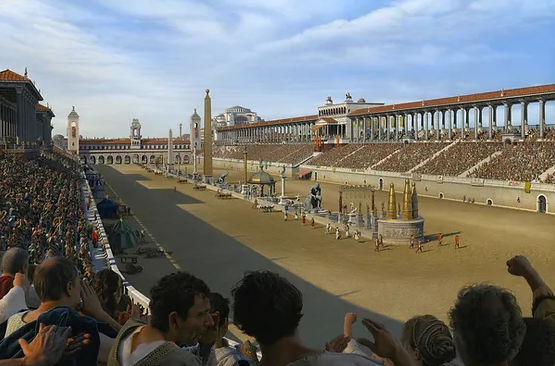
One of the greatest legacies of this empire in gambling culture was the introduction of horse racing and the betting associated with it. The Hippodrome of Constantinople, where these competitions took place, was one of the most important entertainment centers in Byzantium. Beyond being a place of spectacle, it was also a hub for wagering. Citizens bet large sums of money on racing teams, and betting extended to other public events, such as gladiator fights or animal combats.

These types of bets and public games, tied to mass spectacles, had a major influence on European gambling culture. While horse racing was not exclusive to Byzantium, the emphasis on large-scale betting during these events spread to Western Europe, particularly in places like Rome, and later throughout medieval Europe. The earliest forms of what we now know as racetracks or horse racing circuits were inspired by the Byzantine tradition.

Although the fall of the Byzantine Empire in 1453 marked the end of its political and military dominance, its cultural influence endured long after. Byzantine customs, art, and traditions blended with those of Western Europe, especially during the Renaissance and the Middle Ages. Gambling practices from Byzantium continued to evolve in Europe, and the legacy of dice, betting on sporting events, and public competitions shaped the gambling culture that persists today.

In conclusion, gambling in the Byzantine Empire had a profound impact on the evolution of gambling culture in Europe, leaving an indelible mark on the history of entertainment. From dice to horse racing and public spectacles, it helped shape many of the practices we now associate with casinos and gambling halls.

Categories
History and culture

The mystery of the number 7 in gambling: why is it considered a lucky number in many games of chance?

The number 7 has been recognized worldwide as a symbol of good luck, especially in the realm of gambling. Its presence and meaning have transcended cultural and religious boundaries, becoming a central figure both in popular superstition and in the world of entertainment and chance. But why does the number 7 enjoy this reputation? Where does this fascination, which persists to this day, come from? Below, we explore its origin and its relationship with gambling.

The attraction to the number 7 is not limited only to casinos. Throughout history, this number has carried positive symbolism in different cultures and religions. In the Bible, for example, the seventh day marks the creation of the world, giving the 7 a link to perfection and divinity. In mythology, this number is associated with the magical and the mysterious, being considered a bearer of power and fortune.

Ancient civilizations such as the Egyptian, Greek, and Roman also attributed special characteristics to the number 7. In fact, there are seven wonders of the ancient world, as well as seven days of the week, reinforcing its presence in our daily lives and in our deepest beliefs.

In casinos, the number 7 has taken on a prominent role, especially in slots. This number has become one of the most powerful symbols of classic slot machines, with players longing to land three 7s in a row — a result traditionally indicating the jackpot or grand prize. This connection with luck is no accident: the original designers of slot machines chose 7 because of its strong association with fortune, which contributed to its popularity and the mysticism surrounding its appearance in gambling.

Roulette also honors the number 7. Although it is not the most frequent number on the wheel (which contains 37 or 38 numbers, depending on the European or American version), many players believe that 7 has a special power linked to luck. Its presence in bets is common, as players think this number has the ability to grant them fortune in a way others cannot.

The appeal of this number in gambling is not only tied to cultural traditions but also to psychological factors. Numerous studies indicate that people associate the number with luck due to its frequent appearance in different forms of entertainment, such as movies, music, and even literature. It is also perceived as a “perfect” or “complete” number, as it appears in natural phenomena like the seven days of the week, reinforcing its connection to balance and harmony.

This perception of luck runs so deep in our psyche that even the most skeptical players cannot help but feel drawn to it. Thus, 7 has become a mystical symbol surrounding gambling, intensifying the thrill and mystery that players seek when taking part in it.

In conclusion, the number 7 has historically been a symbol of good luck, and its presence in slots, roulette, dice, and other games of chance is no coincidence. Its rich cultural, religious, and psychological background, combined with its inherent mysticism, makes it a favorite choice for those seeking fortune in gambling. While there is no guarantee that 7 will secure a win, its symbolic power remains undeniable, and many players continue to trust in it. So next time you find yourself in a casino, don’t hesitate to try your luck with the number 7… who knows, you might be closer to fortune than you imagine!