Categories
History and culture

Gambling in the Byzantine empire: how it influenced the culture of play in Europe

The Byzantine Empire, heir to the rich cultural tradition of the Roman Empire, left a considerable legacy in many areas, including the arts, religion, politics, and, surprisingly, gambling. Although the earliest forms of gambling in the region dated back to Roman times, it was under Byzantine rule that certain practices and structures of play gained cultural relevance, later influencing the development of gambling in Europe during the Middle Ages and beyond.

In this article, we will explore how the gaming traditions of the Byzantine Empire shaped the culture of gambling in Europe, setting trends that would endure for centuries.

In the Byzantine Empire, gambling was present in many aspects of daily life. Although at times the Church, particularly during the High Middle Ages, attempted to suppress it as a morally questionable activity, betting and games of chance remained an important part of popular culture. At the height of Byzantium, gambling was enjoyed by both the upper classes and the lower classes. Citizens engaged in various forms of entertainment, such as horse racing, dice, and wagering.

One of the most popular forms of gambling in Byzantium was dice. This game was not only part of citizens’ leisure but also a social activity that transcended class boundaries. Dice, known in Greek as kýboi (κύβοι), were central to betting and were played in markets, homes, and often in the streets. The act of throwing dice was associated with luck, a concept that would remain significant in European cultures throughout the centuries.

Over time, the rules and variations of dice games evolved, but the essence remained the same. This simple yet addictive form of play spread beyond the Byzantine Empire and was quickly embraced by medieval European cultures, where it became even more popular.

The relationship between the Byzantine Church and gambling was ambiguous. On the one hand, Christian morality condemned wagering and excessive gambling, but on the other, gambling was deeply embedded in daily Byzantine life, from religious celebrations to festivals. Despite ecclesiastical condemnation, gambling remained a pastime for members of the imperial court, the nobility, and often the soldiers. There were even informal “gambling houses” where regular players gathered in private or semi-clandestine spaces, away from church control.

One of the greatest legacies of this empire in gambling culture was the introduction of horse racing and the betting associated with it. The Hippodrome of Constantinople, where these competitions took place, was one of the most important entertainment centers in Byzantium. Beyond being a place of spectacle, it was also a hub for wagering. Citizens bet large sums of money on racing teams, and betting extended to other public events, such as gladiator fights or animal combats.
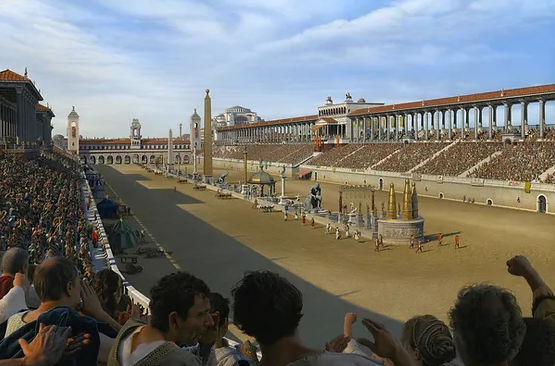
These types of bets and public games, tied to mass spectacles, had a major influence on European gambling culture. While horse racing was not exclusive to Byzantium, the emphasis on large-scale betting during these events spread to Western Europe, particularly in places like Rome, and later throughout medieval Europe. The earliest forms of what we now know as racetracks or horse racing circuits were inspired by the Byzantine tradition.

Although the fall of the Byzantine Empire in 1453 marked the end of its political and military dominance, its cultural influence endured long after. Byzantine customs, art, and traditions blended with those of Western Europe, especially during the Renaissance and the Middle Ages. Gambling practices from Byzantium continued to evolve in Europe, and the legacy of dice, betting on sporting events, and public competitions shaped the gambling culture that persists today.

In conclusion, gambling in the Byzantine Empire had a profound impact on the evolution of gambling culture in Europe, leaving an indelible mark on the history of entertainment. From dice to horse racing and public spectacles, it helped shape many of the practices we now associate with casinos and gambling halls.

Categories
Tips and best practices

The best times to visit a casino: discover the ideal atmosphere

If you’ve ever visited a casino, you know that the experience can vary greatly depending on the time of day you choose to go. Every hour has its own rhythm and atmosphere. If you want to make the most of your visit, it’s important to pick the schedule that best matches what you’re looking for: energy and competition or calm and focus? Here are some recommendations to help you find the perfect vibe according to your preferences.

Why timing matters

The atmosphere isn’t the same in the morning as it is at night. While there’s always excitement in the air, the number of people, the type of games available, and even the noise level can change drastically depending on the hour. If you know when to go, you’ll be able to enjoy the perfect environment for what you want — whether it’s an adrenaline-filled night or a more relaxed experience.

For thrill seekers: peak hours

If you love being surrounded by people, bright lights, and the constant sound of machines, weekends are the ideal time for you. Friday and Saturday nights are peak hours in casinos, with the largest number of players eager to try their luck. This is the best time to enjoy the competition and, of course, the energy that fills the room.

Take advantage of special promotions or themed activities that many casinos often offer during these days.

For those who prefer something calmer: off-peak hours

If you’d rather enjoy a relaxed environment without the crowds, off-peak hours are perfect. This usually happens in the early afternoon or during weekdays (Monday through Thursday), when most people are working or resting. At these times, the casino tends to be less crowded, giving you more space and shorter wait times.

For players seeking focus: mid-hours

If you’re the type of player who prefers to concentrate and think through each move, early afternoon or even midday are the best times. Casinos are generally less busy, allowing you to focus more on your strategy and enjoy the game without distractions. Plus, if you’re learning or improving your skills, this is the perfect moment to receive more personalized attention from the staff.

Tips to make the most of your visit

  • Check promotions and special events: many casinos have special promotion days or scheduled events that may include discounts or bonuses. If you want to take advantage of these opportunities, check the casino’s calendar to make sure you go at the right time.
  • Avoid peak hours if you prefer peace and quiet: weekend nights can be exciting, but if you’d rather play without noise or crowds, choose a mid-hour slot or even weekdays.
  • Choose based on your favorite games: playing slots can be more entertaining during peak hours, when more people are trying their luck.

In short, the key to enjoying a casino to the fullest is knowing what kind of atmosphere you’re after. If you like the thrill and energy of a crowded place, friday and saturday nights are your best allies. If you prefer a more relaxed environment to focus and play at your own pace, weekday afternoons or early hours of the day are the best. Every time offers something different — you just have to pick the one that suits you. So choose your moment, and may luck be on your side!

Categories
History and culture

The mystery of the number 7 in gambling: why is it considered a lucky number in many games of chance?

The number 7 has been recognized worldwide as a symbol of good luck, especially in the realm of gambling. Its presence and meaning have transcended cultural and religious boundaries, becoming a central figure both in popular superstition and in the world of entertainment and chance. But why does the number 7 enjoy this reputation? Where does this fascination, which persists to this day, come from? Below, we explore its origin and its relationship with gambling.

The attraction to the number 7 is not limited only to casinos. Throughout history, this number has carried positive symbolism in different cultures and religions. In the Bible, for example, the seventh day marks the creation of the world, giving the 7 a link to perfection and divinity. In mythology, this number is associated with the magical and the mysterious, being considered a bearer of power and fortune.

Ancient civilizations such as the Egyptian, Greek, and Roman also attributed special characteristics to the number 7. In fact, there are seven wonders of the ancient world, as well as seven days of the week, reinforcing its presence in our daily lives and in our deepest beliefs.

In casinos, the number 7 has taken on a prominent role, especially in slots. This number has become one of the most powerful symbols of classic slot machines, with players longing to land three 7s in a row — a result traditionally indicating the jackpot or grand prize. This connection with luck is no accident: the original designers of slot machines chose 7 because of its strong association with fortune, which contributed to its popularity and the mysticism surrounding its appearance in gambling.

Roulette also honors the number 7. Although it is not the most frequent number on the wheel (which contains 37 or 38 numbers, depending on the European or American version), many players believe that 7 has a special power linked to luck. Its presence in bets is common, as players think this number has the ability to grant them fortune in a way others cannot.

The appeal of this number in gambling is not only tied to cultural traditions but also to psychological factors. Numerous studies indicate that people associate the number with luck due to its frequent appearance in different forms of entertainment, such as movies, music, and even literature. It is also perceived as a “perfect” or “complete” number, as it appears in natural phenomena like the seven days of the week, reinforcing its connection to balance and harmony.

This perception of luck runs so deep in our psyche that even the most skeptical players cannot help but feel drawn to it. Thus, 7 has become a mystical symbol surrounding gambling, intensifying the thrill and mystery that players seek when taking part in it.

In conclusion, the number 7 has historically been a symbol of good luck, and its presence in slots, roulette, dice, and other games of chance is no coincidence. Its rich cultural, religious, and psychological background, combined with its inherent mysticism, makes it a favorite choice for those seeking fortune in gambling. While there is no guarantee that 7 will secure a win, its symbolic power remains undeniable, and many players continue to trust in it. So next time you find yourself in a casino, don’t hesitate to try your luck with the number 7… who knows, you might be closer to fortune than you imagine!