Categories
Gambling strategies

The best tactics and strategies for playing slots

Slots are one of the biggest attractions in the gambling industry. Their ease of use, combined with the possibility of winning big prizes, makes them an irresistible option for gambling enthusiasts.

Although slot machines are easy to understand and play, many people wonder how they can improve their chances of winning. Unlike other games, slots operate with a random number generator (RNG), which makes each spin completely unpredictable. This means there is no magic formula to guarantee a win, but there are strategies that can help you have a more enjoyable and possibly more profitable experience.
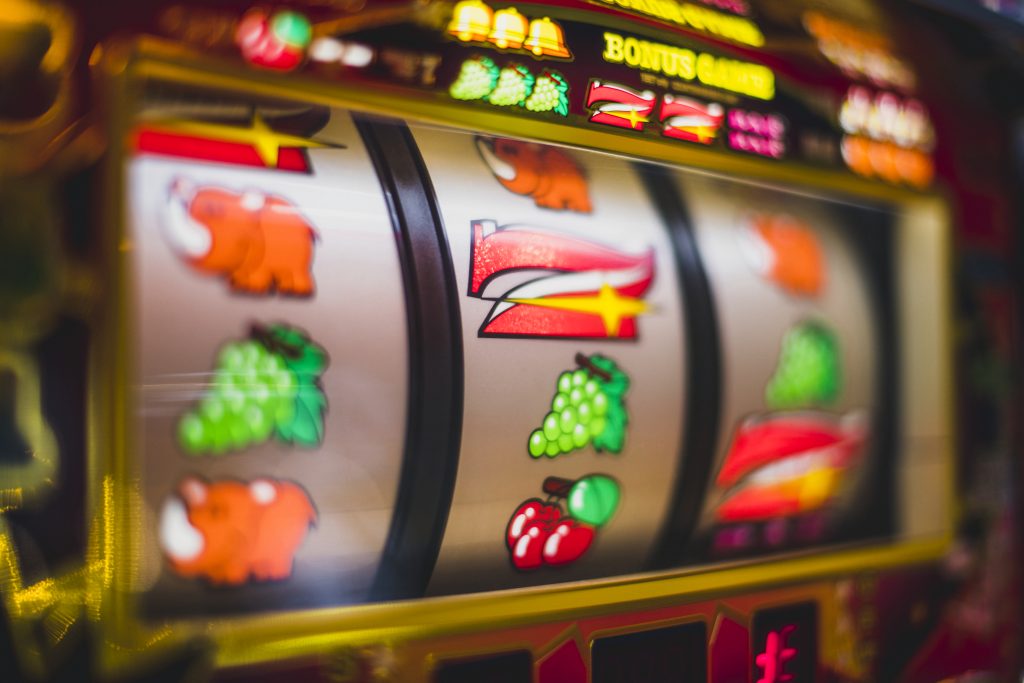
Estrategies for playing slots wisely

  1. Familiarize yourself with the features of the machine
    Although all slot machines may look similar at first glance, each has its own particularities. Some offer multiple paylines, others include bonus rounds or progressive jackpots. Before you start playing, it is crucial to understand how the machine works. Knowing how many paylines it has, which symbols are the most valuable, and how to activate bonuses will give you an advantage and allow you to play more strategically.
  2. Set a budget and stick to it
    Managing your money is essential to enjoying the game without unpleasant surprises. Setting a budget before you start playing will help you control your spending and avoid going overboard. Remember that slots are a form of gambling, and it is important to bet only what you are willing to lose so that the experience remains fun rather than frustrating.
  3. Choose machines with a high RTP
    The RTP (return to player) is an important indicator when choosing a machine. This percentage reflects how much of the money wagered is paid back to players over time. The higher the RTP, the more likely you are to receive frequent payouts. Make sure to select slot machines with a high RTP to maximize your chances of winning in the long run.
  4. Play progressively on jackpot machines
    Progressive slot machines offer huge prizes that grow with every bet placed. If you decide to play these types of slots, it is wise to adopt a gradual betting strategy. Start with small bets and increase them progressively to improve your chances of winning the big pot. However, always make sure your bets remain proportional to your budget.
  5. Don’t fall for the “hot machine” myth
    It is common to hear that a machine is “hot” and about to pay out a big prize. However, it is important to understand that all slots, as mentioned earlier, work with a random number generator (RNG). This means every spin is completely independent of the last. The idea that a machine is “due” for a win is a myth—the odds of winning are the same on every spin.
  6. Enjoy the game responsibly
    Finally, remember that slots are designed as a source of entertainment. While it is natural to think about the big prizes, the most important thing is to enjoy the process without becoming obsessed with winnings. Set limits on both time and money, play responsibly, and have fun.

With these tips, you can enjoy slot machines in a more strategic and mindful way. Although the final outcome always depends on luck, playing in an informed way allows you to get the most out of your experience.

Categories
History and culture

Gambling in ancient Rome: how did the Romans play?

Gambling has a long history that stretches back thousands of years, and one of the most fascinating civilizations in this regard was ancient Rome. While today’s casinos offer a wide range of opportunities to try your luck, Roman traditions in gambling had a notable influence on how we understand games of chance today. But how did the Romans gamble, and what types of games were popular in their time? Below, we explore the most common games in ancient Rome and how they might resemble the experiences we find today in casinos.

One of the most popular pastimes in Rome was dice throwing, enjoyed by both the upper classes and the lower classes. Roman dice, crafted from materials such as bone, wood, or ivory, were used to predict the outcome of throws, and their dynamics resembled modern games like craps or sic bo, which are still played in casinos today. Dice were found in almost every Roman household, and competitions and wagers for money or goods were common. In places like the Forum, taverns, and public spaces, dice throwing was not only a personal form of entertainment but also a collective experience.

Another very popular game was tali, played with four dice and based on a system reminiscent of modern dice games, though with its own unique rules. The goal was to achieve the best possible combination with each throw. Bets in tali were often high, and Romans were not hesitant to wager large sums of money—or even slaves—on a single game. Matches could last for hours, creating an atmosphere filled with tension and excitement, not unlike modern dice competitions.

Tabula, another game that captivated Romans, is very similar to modern backgammon. This board game combined luck and strategy and was played on a board with 24 spaces. Players rolled dice to move their pieces, and the objective was to reach the end of the board first. Like backgammon today, tabula required both luck and skill, making it a challenge of chance and intellect alike.

While chariot races at the Circus Maximus were not strictly considered gambling games, the wagers Romans placed on drivers or horses were undoubtedly a form of testing luck. These competitions drew thousands of spectators and provided a unique opportunity to bet significant sums on the outcome. This tradition of wagering on sporting events closely echoes modern sports betting.

Romans did not have lotteries as we know them today, but they did organize public raffles, especially during festivals or major events. Citizens could buy tickets to participate in draws that offered prizes such as land, slaves, money, and even luxury goods. Although less frequent than other games of chance, raffles and lotteries were an important part of Roman social and political life.

The influence of Roman gambling practices has endured to the present day. The mechanics and dynamics of modern games—such as betting, the thrill of winning or losing, competition, and the creation of communities around gaming—have their roots in ancient Roman traditions.

In summary, Romans had a relationship with gambling very similar to what we experience today. Whether through dice, betting on races, or participating in raffles, they sought not only entertainment but also the chance to test their luck and challenge fate. This fascination with chance remains alive in today’s casinos, where the excitement of playing and the desire to win continue to be central.

Categories
Gambling strategies

What are jackpots and how do they work?

If you are a fan of slots, you have probably asked yourself at some point: what is a jackpot and how can I win it? In our casinos, jackpots are the star of the show, offering players the chance to win impressive prizes with just a single spin. But beyond the excitement of seeing the jackpot symbol appear, what does it really mean, and how does it work? Here we explain everything so you can enjoy the experience even more.

A jackpot is the top prize that can be won on a slot machine. Unlike common prizes that are awarded for more frequent symbol combinations, the jackpot is triggered only when a special combination is hit or, in some cases, when a particular condition in the game is met. There are several types of jackpots, each with its own system and dynamics:

  • Fixed jackpot: this type of jackpot has a set value that does not change, regardless of how many players participate or how long the game has been played. It neither resets nor fluctuates. Each time someone wins this jackpot, the amount returns to its original figure.
  • Progressive jackpot: a small percentage of every bet placed by players goes into a cumulative pot, which means this prize keeps growing until someone is lucky enough to win it. Progressive jackpots can reach astonishing amounts, and the best part is that the more people play, the bigger the pot becomes.

One of the challenges with jackpots is that they are awarded only at specific moments, which makes winning one quite difficult. This is an important point to remember, as you should not become obsessed with chasing the grand prize at all costs.

One option is to play higher-stake machines, as their progressive jackpots tend to grow faster. This, in turn, increases the chances of triggering the top prize compared to lower-cost machines.

However, the most advisable approach is to choose the machine that best matches each player’s preferences and knowledge. For those who want to make the most of every opportunity, playing a slot with the highest possible number of paylines is ideal. For more cautious players, traditional machines may be the best option. In any case, it is important to remember that gambling should be seen as a form of entertainment, and while winning big prizes is difficult, the fun is always guaranteed.

Categories
History and culture

The origin of slots: from the Liberty Bell to today

Slot machines, also known simply as slots, are a cornerstone of the gambling industry—but their history is far richer and more fascinating than many might imagine. From their humble beginnings to the sophisticated machines we know today, slots have come a long way. In this article, we will explore the origin of the first slot machines, their evolution over the years, and some curious facts about their history.

The first steps: Charles Fey’s “Liberty Bell” (1895)

In 1895, American inventor Charles Fey created the first automatic slot machine. The Liberty Bell was built in San Francisco and is considered the very first in history. It featured three reels and used symbols such as bells, diamonds, hearts, stars, and bars. The bell, in particular, became the machine’s most iconic symbol.

The Liberty Bell was groundbreaking because, for the first time, players could win a jackpot by lining up three bells. Its automatic payout system also meant that players no longer needed an operator to hand out winnings, making the process much more efficient.

The evolution of slot machines: new designs and features.

Before the Liberty Bell, there was the Card Bell, created by engineers Sittman and Pitt in New York in 1891. This machine used playing cards instead of fruit symbols. Players had to form winning poker hands to earn prizes, but unlike the Liberty Bell, it did not have an automatic payout system. Winners had to approach an operator to receive their prize.

Following the success of the Liberty Bell, new versions of slot machines began to appear. During the early decades of the 20th century, machines remained entirely mechanical, but features were gradually added to make them more engaging and capable of offering larger prizes.

When gambling was banned in many parts of the United States, slot machines adapted to new regulations. Fruit machines (1910–1920), with cherries, lemons, and grapes, gained popularity. Because they awarded chewing gum or candy instead of cash, they managed to avoid legal restrictions. These machines became a fun form of entertainment in bars and shops.

The shift toward electronic machines.

With advances in technology, slot machines began to change dramatically. By the mid-20th century, electronic components started to replace purely mechanical parts. In 1963, Bally Technologies introduced Money Honey, the first electromechanical slot machine. This model replaced gears with electronics, allowing for higher payouts and a smoother player experience.

The Money Honey also introduced automatic bonus features, which meant machines could offer bigger prizes without the need for an operator. This breakthrough revolutionized the industry, paving the way for more combinations, multiple paylines, and—most importantly—larger jackpots.

The rise of digital and progressive slots.

In the 1980s and 1990s, slot machines experienced a second revolution with the arrival of digital machines and progressive jackpots. These quickly became the most popular because they offered the chance to win enormous sums of money, with the jackpot growing as more players participated.

Digital slots also became more complex, incorporating video screens, multiple paylines, and virtual reels. This opened the door for themed slots based on movies, TV shows, and popular characters, making them appealing to a much wider audience.

From the Liberty Bell to the digital era.

In summary, slot machines have come a long way since the invention of the Liberty Bell in 1895. What began as a mechanical device with simple symbols and manual payouts has transformed into a digital industry that spans from traditional casinos to online platforms. Each technological advance has made slots more complex, interactive, and entertaining.

With the ongoing development of virtual reality, artificial intelligence, and other innovations, the future of slot machines looks as bright as the flashing lights on their screens. Who knows what surprises the next generation of slots will bring?